Home/Special Projects

Technical systems for problems that do not fit a standard agency menu.

Trident accepts a limited number of unusual, sensitive, or technically demanding projects for collectors, estates, founders, private organizations, and cultural or scientific institutions.

Collectors + private archivesEstates + legacy materialsScientific + cultural systemsUnusual technical problems
01 / The mandate

Discretion is part of the architecture.

Some assignments cannot be solved by choosing a popular platform and configuring a dashboard. The material may be private, the problem may cross several technical domains, or the desired result may not exist as a commercial product.

These engagements combine research, design judgment, software, AI, visualization, data discovery, and systems engineering. Trident stays deliberately small so the person diagnosing the problem remains close to the work throughout the project.

The objective is not novelty for its own sake. It is to create a controlled, legible system around something valuable, unusual, or previously impossible to manage.

02 / Territories

Four forms of uncommon work.

The categories overlap by design. A private archive may require discovery software, a scientific exhibit may need a custom interface, and an estate may contain both cultural material and difficult digital systems.

SP / 01

Collectors & private archives

Intelligent cataloging, search, discovery, and visual interfaces for complex bodies of material that need to remain controlled and understandable.

  • Private knowledge and retrieval systems
  • Collection inventory and discovery
  • Local search across documents and media
  • Visual interfaces for unusual collections
  • Organization that supports provenance research
SP / 02

Estates & legacy materials

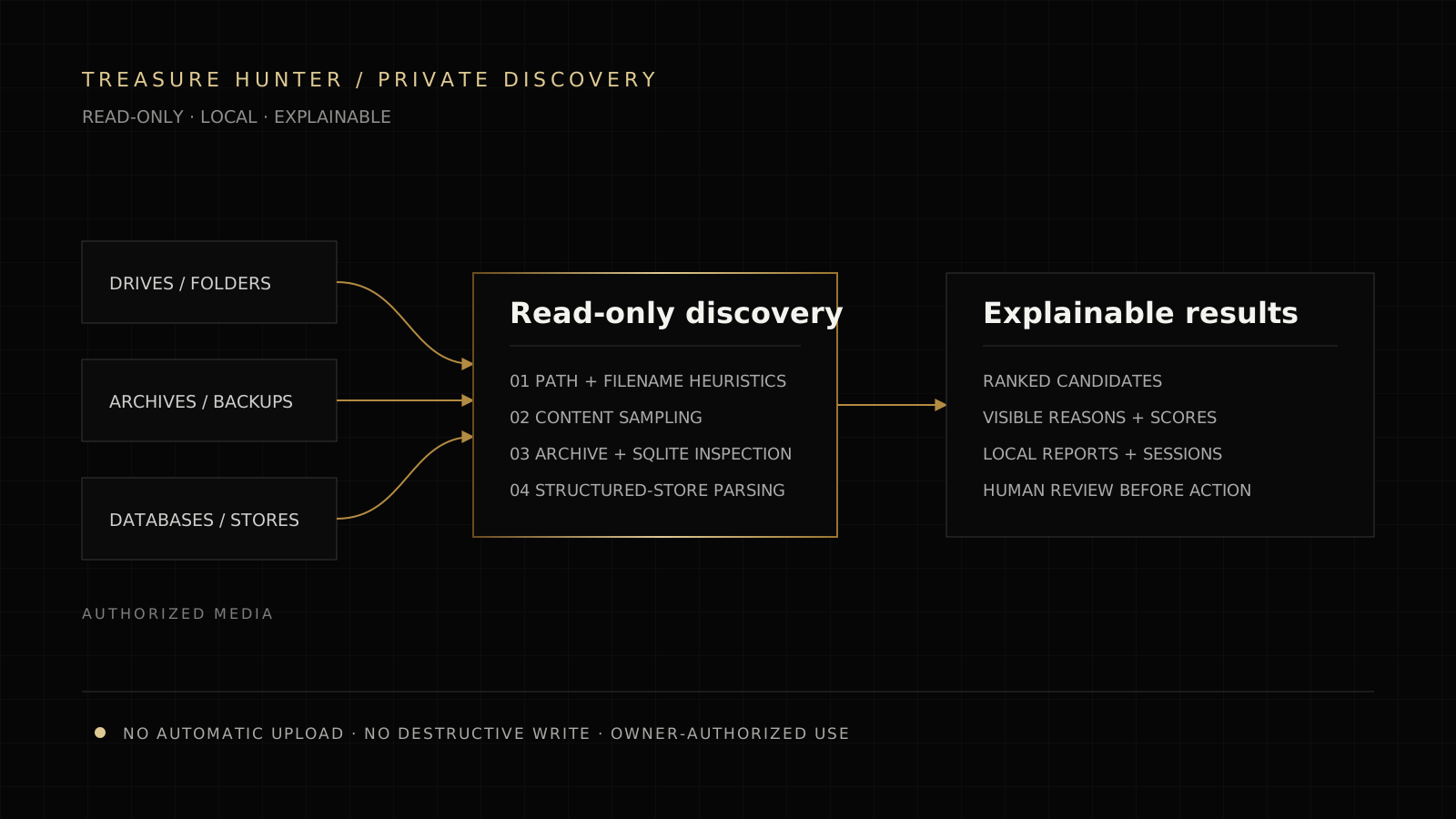
Careful inventory and discovery across scattered drives, backups, archives, and personal or institutional records.

  • Digital-estate inventory
  • Identification of important or overlooked files
  • Consolidation maps for scattered archives
  • Controlled local search and review
  • Interfaces that make a lifetime of material legible
  • Estate technology assessment
  • Legacy media and format rescue
SP / 03

Scientific, artistic & cultural systems

Interactive visualization and technical storytelling for exhibits, education, institutions, events, and ambitious digital experiences.

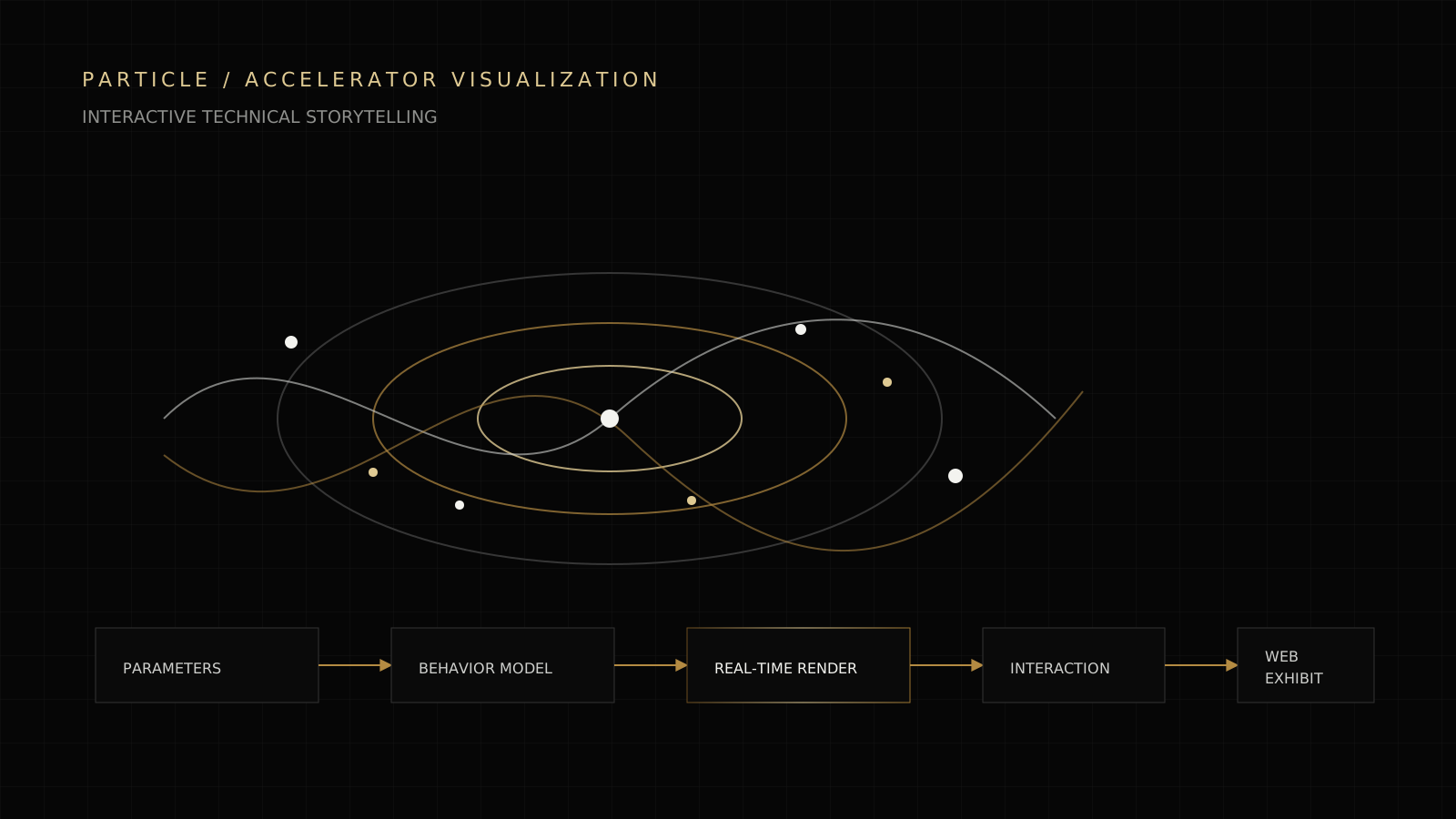
  • Particle and accelerator visualization
  • Interactive scientific communication
  • Museum and exhibit interfaces
  • Generative visual systems
  • Experiential technical storytelling
SP / 04

Special technical problems

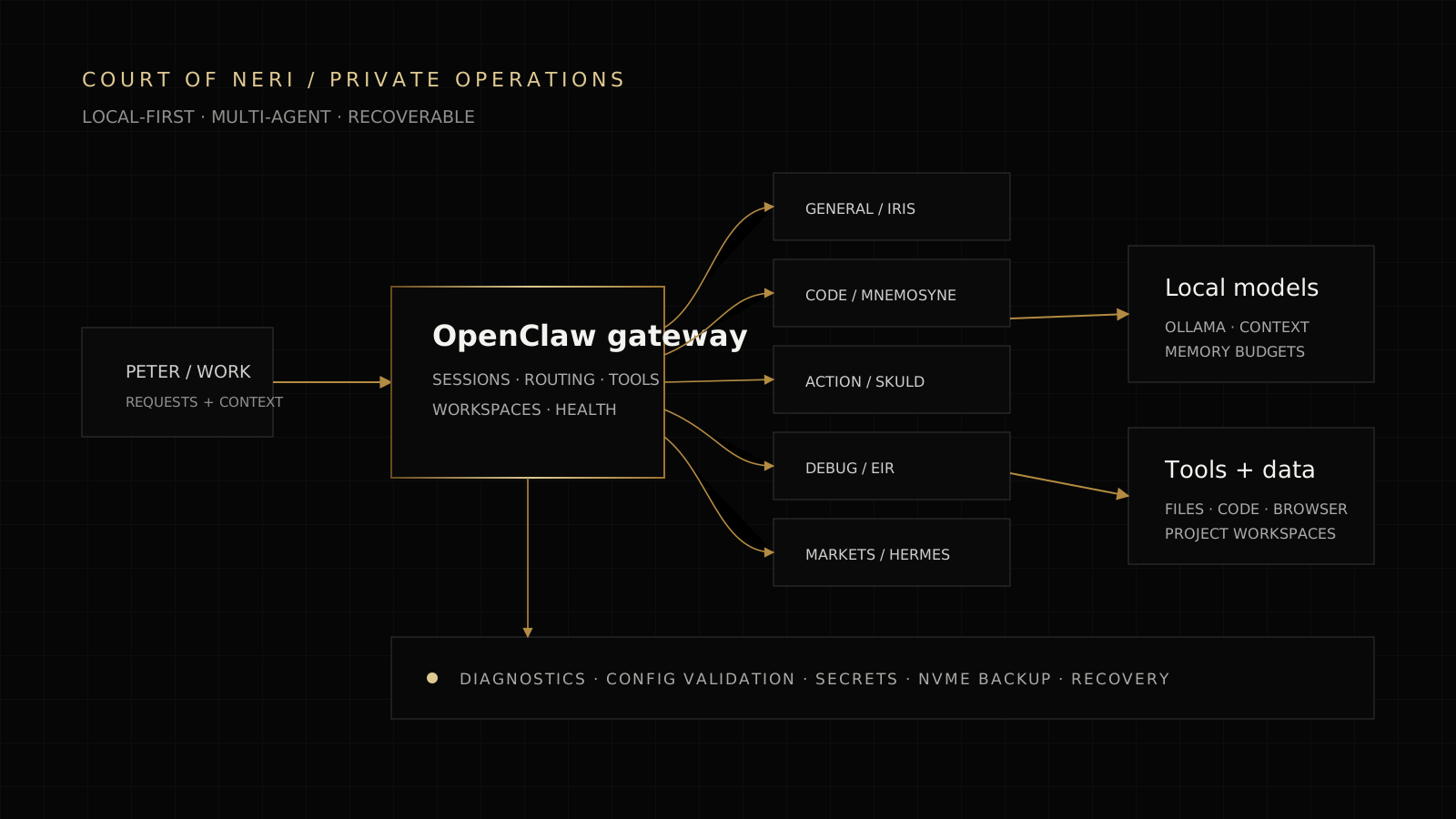
Prototype and rescue work where hardware, software, AI, data, interface design, or an unfinished idea must become one coherent system.

  • Private decision tools
  • Cross-platform or unconventional deployments
  • Hybrid software and hardware prototypes
  • Experimental interfaces
  • Reconstruction of partially developed systems
  • One-off commissions where no standard product exists
  • Physical-computing and embedded interface prototypes
03 / Protocol

A controlled path from ambiguity to evidence.

Special projects are scoped in stages so sensitive material, technical risk, and commercial reality remain visible before the work becomes large.

01

Confidential discovery

Define the objective, material, stakeholders, access, and exposure boundaries.

02

Evidence map

Inspect what exists, what is missing, and where uncertainty or risk actually lives.

03

Prototype

Prove the key interaction or technical assumption before committing to a larger build.

04

Build + document

Create a recoverable system with visible decisions, constraints, and operating instructions.

05

Steward

Refine, support, or transfer the system according to the project’s long-term needs.

05 / Questions

Special-project engagement questions.

A strong special project usually has no credible off-the-shelf solution, involves valuable or sensitive material, crosses multiple technical disciplines, or requires an unusually high level of design judgment and direct founder involvement.

Yes, when the scope, authorization, access rules, storage, and handling expectations can be defined clearly. Local processing and controlled review may be used when cloud exposure would be inappropriate.

Trident can design or apply read-only discovery workflows for owner-authorized media, inventorying and surfacing candidate material for human review. This is not a substitute for a forensic data-recovery laboratory, legal e-discovery provider, or damaged-media specialist.

Selected scientific, artistic, and cultural projects are a strong fit, particularly when interactive visualization, technical storytelling, generative systems, or a custom interface is central to the experience.

Sometimes. Trident first maps what is working, what is missing, and whether the underlying idea can be stabilized without creating a larger technical liability.

They begin with a confidential fit review, followed by a paid discovery or prototype phase when the project requires deeper inspection. Larger scope is defined only after the core problem and constraints are understood.

06 / Private inquiry

Bring the unusual problem, not a polished brief.

Describe the material, the risk, what has already been tried, and what would become possible if the system existed.

Discuss a special project